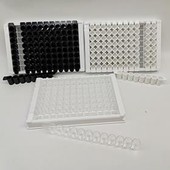
The domestic pipette is an experimental product with the characteristics of enzyme labeling analysis, molecular screening, kinetic research, DNA amplification and so on. For research use only.
When measuring with a domestic pipette, adjust the nut on the back according to the volume of the amount, use the right hand to operate the pipette tip of the appropriate size and press the button on the back halfway, put the pipette tip in the liquid, and slowly release the handle button. (High viscosity prevents bubbles from entering), suck up the liquid; then press the button to the bottom to release the liquid.
When adjusting the range, if you want to adjust the volume from a large volume to a small volume, you can rotate the knob counterclockwise according to the normal adjustment method; but if you want to adjust the volume from a small volume to a large volume, you can first rotate the scale knob clockwise until more than The scale of the range, and then back to the set volume, so as to ensure the accuracy of the measurement. During this process, do not turn the button out of the range, as this will jam the internal mechanism and damage the pipette.
Precautions for the use of domestic pipettes:
1. If not in use, adjust the range of the domestic pipette to a large scale to loosen the spring to protect the spring.
2. It is best to clean domestic pipettes regularly. You can use soapy water or 60% isopropyl alcohol, then rinse with distilled water and dry naturally.
3. Before high temperature disinfection, ensure that the pipette can adapt to high temperature.
4. By repeating the method of weighing distilled water many times, it can be calibrated in an environment of 20-25 degrees.
5. Check whether there is liquid leakage during use. In this method, liquid is drawn in and held vertically in the air for a few seconds to see if the liquid level drops. If fluid leaks, the reasons are as follows:
(1) Whether the suction head matches;
(2) Whether the spring piston is normal;
(3) If it is a volatile liquid (as is the case with many organic solvents), there may be a problem of saturated vapor pressure. You can aspirate and drain the liquid multiple times before pipetting.