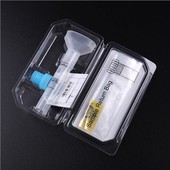
DNA analysis is an important technology in biological research, medical diagnostics, and forensic science. It involves extracting and purifying DNA from biological samples and then amplifying and detecting specific DNA sequences using various methods such as PCR and sequencing. However, the quality and yield of DNA can significantly impact the accuracy and reliability of downstream applications. This is why purification extraction columns are an essential tool in the analysis of COVID-19 and monkeypox.
The role of purification extraction columns in COVID-19 is mainly to isolate and purify viral RNA or DNA from samples. When testing for the new coronavirus, viral RNA or DNA needs to be extracted from the sample, and then PCR amplified and detected. Purification extraction columns can help separate other impurities in the sample, improve the purity and content of RNA or DNA, and reduce factors that may interfere with the PCR reaction. This can improve the sensitivity and specificity of the test and improve the accuracy and reliability of the results. The use of purification extraction columns can also save time and costs, reduce errors and losses in operations, and is one of the indispensable tools for COVID-19 detection.
Both DNA extraction columns and purification extraction columns have advantages and disadvantages depending on the sample type, DNA application, and user preference. DNA extraction columns are fast, simple, and compatible with a variety of sample types and downstream applications. However, it may not effectively remove all contaminants, may require large amounts of starting material, and may not handle degraded or low-quality DNA well. Purification extraction columns are more specific, sensitive, and efficient at removing contaminants and can handle small amounts of DNA. However, it may require more time, effort, and expertise to optimize the protocol for a specific application, and may be more expensive than DNA extraction columns. The specific choice depends on the customer's needs.